Security debates in the Lake Chad Basin often cast vigilante groups as essential community protectors responding to Boko Haram’s insurgency. That is largely accurate. Yet it can obscure a core reality of the conflict: vigilantes and Boko Haram insurgents are products of the same social worlds shaped by weak and uneven state authority, fluid state borders, and communities practicing hybrid-governance (as opposed to ‘ungoverned’ spaces).
In my recently published article, I argue that both vigilante groups and Boko Haram should be treated as parallel hybrid security-governance actors in the region. Each seeks to reform society in their own image by exercising to varying degrees partial authority over everyday order, including regulating mobility and market access, and enforcing rules in rural communities where state presence is minimal or contested.

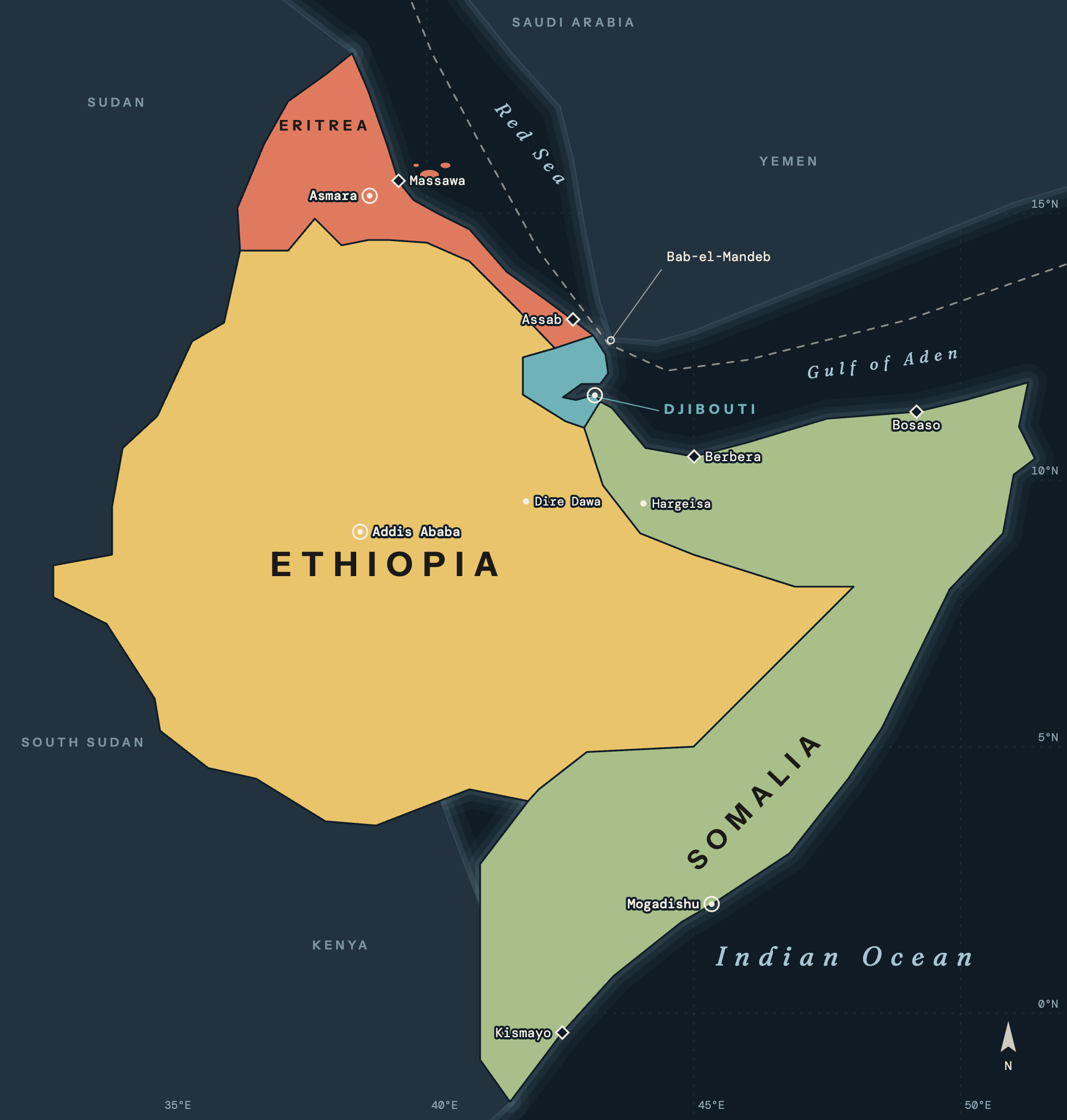
Map of the Lake Chad Basin showing Nigeria, Niger, Chad and Cameroon, and key borderland zones/Credit: Sébastien Moriset.
Two sides of the same coin
Vigilantes have been rightly widely credited with reducing the scope and scale of Boko Haram’s violence, especially during the early years of the insurgency. They provide intelligence, man checkpoints, support army patrols, and often fight Boko Haram insurgents directly. Many communities see them as indispensable because they not only are they often the only form of security, they also know the terrain, speak local languages, and can identify insurgent movement in ways state security forces often cannot.
At the same time, Boko Haram has also built local roots and governance practices, even while ruling through coercion. It has relied local networks for recruitment, surveillance, forced taxation and control of livelihoods. While much of this has been achieved through intimidation and force, they have also exploited grievances that pre-date the insurgency: corruption, abusive security operations, economic exclusion, and perceptions of distant and aloof central governments.
Analytically, what matters is that both actors operate inside the same political economy of insecurity, where formal rules and informal authority overlap.
Why similarities can make vigilantes effective
The parallels between vigilantes and Boko Haram help explain why vigilantes are often effective against insurgents. First is social proximity. Shared language, kinship ties, and everyday familiarity allow vigilantes to read local signals, identify suspicious newcomers, and recognise movement patterns that outsiders miss. Second is local intelligence infrastructure.
Vigilantes sit inside dense networks of traders, drivers, youth groups, religious authorities, and community leaders, producing constant flows of signals that can be turned into actionable intelligence. Third is adaptability. Because vigilantes are embedded in the same environment, they often understand insurgent tactics, routes, and incentives with a level of immediacy that formal forces struggle to replicate.
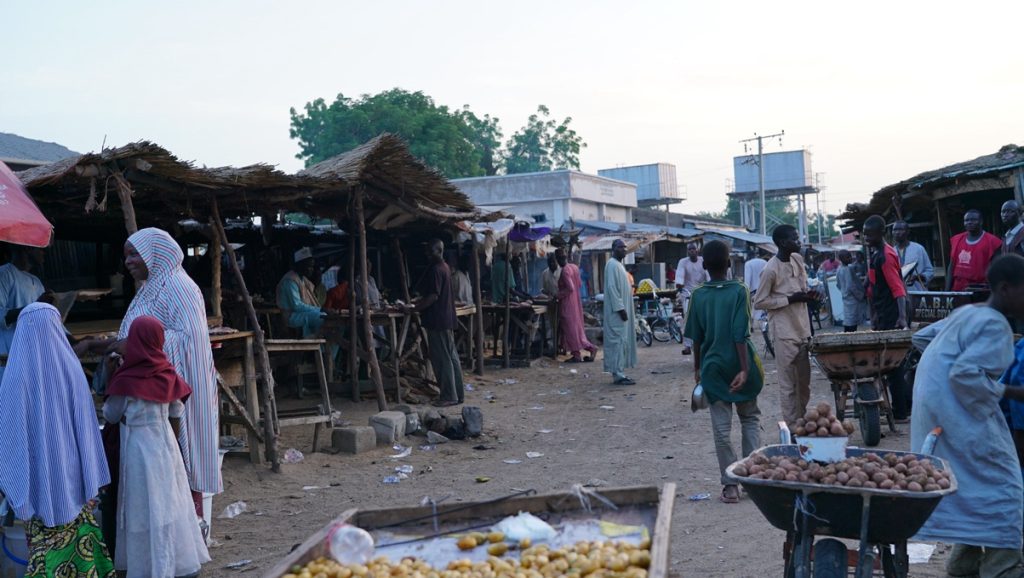
Borno State, Nigeria Market Place/CREDIT: Ifeatu Nnaobi
Why similarities create risk
The same embeddedness that makes vigilantes effective also creates risk when regulation and accountability are weak. When a security actor is woven into community life, they can protect and oppress. The parallels between vigilantes and Boko Haram: shared social world, economic incentives, and partial local authority, also enable opportunistic collusion, which I treat not as an anomaly but as a predictable feature of hybrid orders where boundaries between protection and predation are fluid.
In Kolofata, Cameroon, for example, one vigilante fluent in Arabic, Kanuri, Hausa, Fulani, and pidgin English was allegedly found to have used his language skills and intelligence access to sell information to both Boko Haram and the military simultaneously, playing both sides for personal gain. Additionally, in Kousseri, Cameroon, a group of vigilantes who had initially been reporting trafficked goods to the military reportedly (also see section entitled Collaboration between vigilantes and Boko Haram) discovered that soldiers were confiscating those goods for private profit.
Disillusioned, they began negotiating directly with the insurgents and engaging in cross-border weapons trafficking extending as far as Sudan and Libya. The people who pay the price for this are the communities who rely on vigilantes as their primary source of protection.
While these accounts cannot be independently verified, they were collected following standard qualitative research practice, including purposive-sampled key informant interviews with security experts, civil society members, academics, and an active pioneering member of the CJTF. Importantly, they are as well consistent with the wider pattern of credible reporting that has documented vigilantes abusing their power through extortion at checkpoints, excessive use of force, political instrumentalisation, and sexual and gender-based violence.
The long-term risks are real: vigilantes drift toward predation tied to socioeconomic benefits, power-seeking, or partisan politics, while insurgents exploit governance fractures through bribery, infiltration, or coercion. These are not all exceptional cases of individual moral failure. They are structurally predictable outcomes when armed actors embedded in the same social world operate without oversight, accountability, or viable livelihoods and when the formal institutions they report to are themselves complicit.
The need for a regulatory approach vigilantism
Acknowledging Lake Chad’s conflict ecosystem as fluid clarifies the path forward. The task is not to romanticise vigilantism or pretend it can be wished away. It is to channel its local legitimacy and reach while disincentivising abuses of power, preventing elite capture, and reducing incentives for collusion. The article and its companion policy brief therefore call for comprehensive, regionally coordinated regulation, not isolated trainings or ad-hoc agreements focused on only the most prominent regional vigilante groups.
The policy brief specifically proposes a regional treaty on vigilantism which provides a clear legal status and mandate, with defined limits on their scope; improved training and oversight that prioritise civilian protection; preventative and accountability mechanisms that civilians can safely access; credible sanctions for violations; safeguards against partisan instrumentalisation by political elites; and standardised compensation and exit strategies for vigilantes and their family members. Because flows of people, goods and armed actors are cross-border, coordination among Lake Chad Basin states is key.
This is not a call to dissolve community protection. It is a call to make it more effective, more accountable, and ultimately more stabilising for the region’s security and development.
Abdul Wando is a College Research Coordinator at SOAS, University of London. He previously worked in the Centre for Pan-African Studies (CPAS) at SOAS. His research advances critical hybrid governance approaches to security and development in Africa’s Sahel, with a regional focus on the Lake Chad Basin.
For more information, please see the full open-access article here: Children of the Soil: Parallels Between Vigilantes and Boko Haram in Hybrid Security-Governance of the Lake Chad Basin Region (https://doi.org/10.1080/19392206.2025.2598168)
Companion policy brief: Reframing Security in the Lake Chad Basin: Establishing a regional treaty for vigilantism (https://www.soas.ac.uk/policy-brief-reframing-security-lake-chad-basin)